Noticing the Patterns
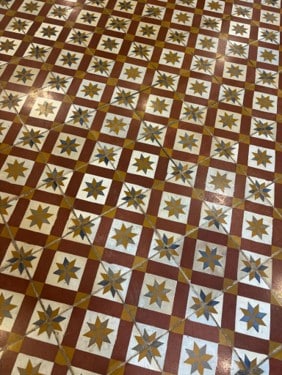
A patterned floor draws the eye not because of a single tile, but because of the relationship between tiles. How they repeat, contrast, and align to create coherence.
Step closer and you see intention. Step back, and the full design emerges.
The boardroom operates in much the same way.
Boards are shaped less by policies and charters and more by patterns of behaviour. These patterns form quietly over time through how directors engage, challenge, dominate, withdraw, or collaborate. Once established, they become “how we do things around here”.
The problem is not that patterns exist.
The problem is when they go unnoticed.
Patterns that shape boardroom effectiveness
Across boardrooms, familiar patterns tend to surface:
- robust debate slipping into positional arguing,
- silence mistaken for alignment,
- professional scepticism softened by politeness,
- speed prioritised over depth,
- individual expertise overshadowing collective judgement.
At an individual level, directors bring their own patterns:
- how quickly they speak,
- how they react when challenged,
- how comfortable they are with uncertainty,
- how willing they are to change their minds.
None of these patterns are inherently right or wrong.
What matters is whether they serve the best interests of the organisation.
Why noticing comes before a Director-Shift™?
Many boards rush to solutions:
- revised agendas,
- new frameworks,
- skills matrices,
- governance checklists.
Yet sustainable improvement rarely happens without reflection.
A Director-Shift™ begins with noticing.
It requires a deliberate pause.
After each meeting, directors can ask:
- What behaviours shaped the quality of our discussion?
- What patterns repeated themselves?
- Where did we engage constructively, and where did we shut each other down?
- What did I contribute that strengthened the board’s work?
- What might I do differently next time?
When reflection becomes habitual, patterns become visible.
When patterns become visible, intentional choice becomes possible.
From awareness to intentional behaviour
Boards that practise reflection consistently:
- observe behaviour without judgement,
- name patterns honestly,
- focus on behaviours rather than personalities,
- hold themselves collectively accountable for how they show up.
This is the essence of Director-Shift™, moving from unconscious repetition to conscious and intentional governance.
Like a floor tile pattern, small, deliberate changes, one tile at a time, can transform the entire design.
Director-Shift™ invitation:
If boards want different outcomes, they must first become curious about their patterns.
A simple Director-Shift™ practice:
After your next board meeting, reflect on three questions:
- What behavioural patterns did I notice in the room?
- What pattern did I observe in myself?
- What one small shift will I practise at the next meeting?
Effective boards are not built only through structure and knowledge.
They are built through awareness, reflection, and intentional behaviour, one Director-Shift™ at a time.
If you’d like to explore how reflective practice can strengthen boardroom dynamics and decision-making, the work begins with noticing.
By Joy-Marie Lawrence