
Seeing, Hearing, Speaking: A Boardroom Metaphor Hidden in Plain Sight
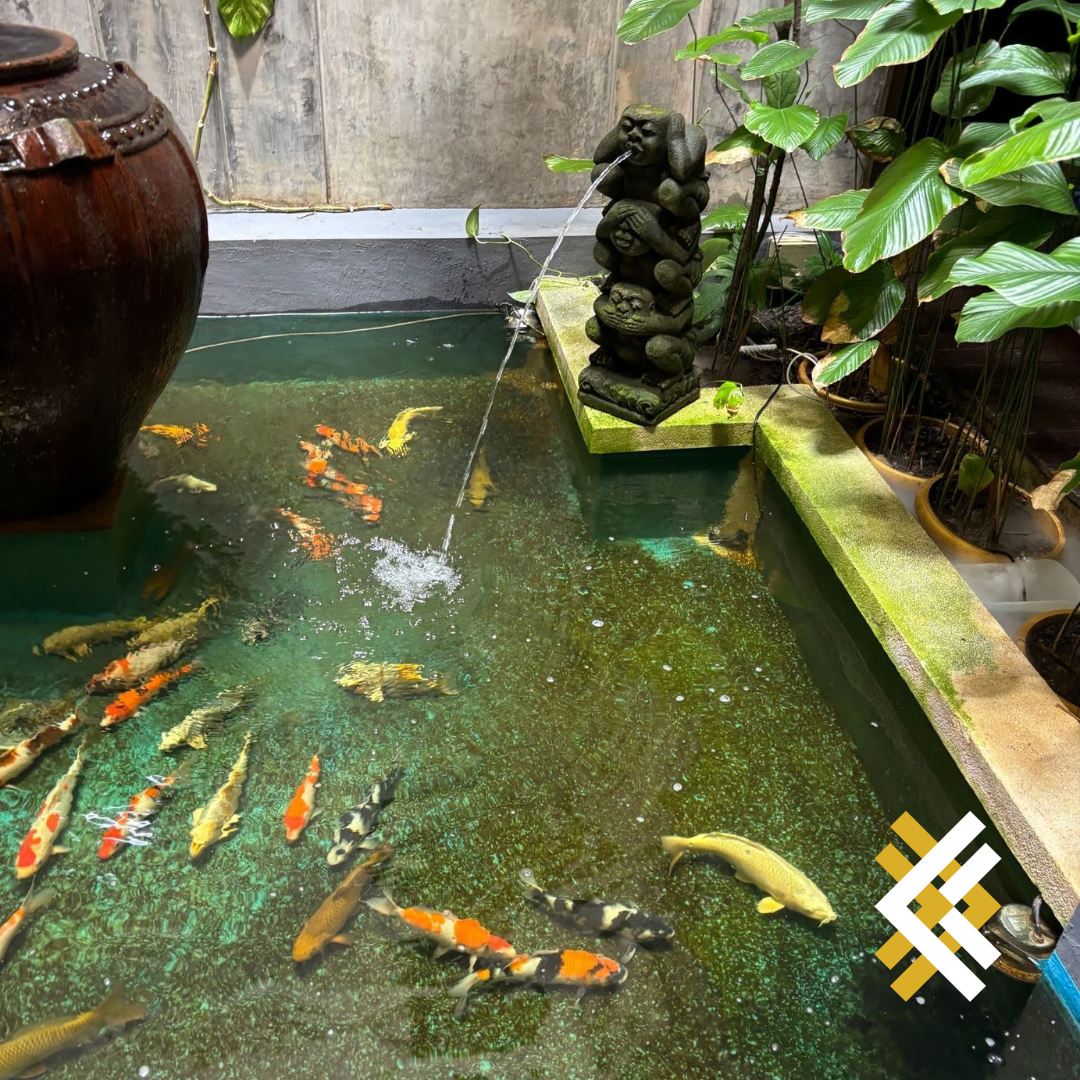
At first glance, it is a tranquil scene:
a koi pond, water gently flowing, fish moving with purpose and grace.
Above the pond sit three statues — one covering its eyes, one its ears, one its mouth.
Water flows from the statue with the closed mouth into the pond below.
The image is serene.
The message, if we look closely, is anything but.
What are we seeing — but not naming?
In the boardroom, we often see more than we admit.
We notice dynamics, tensions, patterns of behaviour, and emerging risks.
And yet:
- We rationalise.
- We defer.
- We assume someone else will raise it.
Self-limiting beliefs creep in:
“It’s not my place.”
“Now isn’t the right time.”
“I don’t have enough information.”
The statue with closed eyes asks us:
What are you choosing not to see?
And just as importantly:
What are your blind spots shaping what you think you see?
The statue with the closed ears asks us:
What are we hearing and what are we blocking out?
Listening in the boardroom is not neutral.
We listen selectively, shaped by experience, bias, loyalty, and fatigue.
Are we:
- Listening only to the loudest voices?
- Hearing arguments but missing the emotion beneath them?
- Filling silences too quickly because they feel uncomfortable?
There is a difference between passive listening and active listening.
Active listening requires presence, patience, and restraint.
It requires us to hear not only what is said — but what is not said.
Am I truly listening, or simply waiting to respond?
What are we saying — and what are we withholding?
Silence in the boardroom can be wise.
It can also be complicit.
Some voices dominate through confidence, authority, or repetition.
Others withdraw — not because they lack insight, but because the space does not invite them in
The statue with the closed mouth is perhaps the most confronting.
Especially when water flows from it — a reminder that what is unspoken still shapes the system.
We must ask:
- Who is speaking — and why?
- Who is silent — and at what cost?
- What needs to be said now, not later?
Director-Shift™ invitation:
Director-Shift™ is not about speaking more, listening harder, or seeing everything.
It is about awareness with intention.
- Awareness of what we notice
- Awareness of how we listen
- Awareness of when we speak — and when we choose not to
The koi pond teaches us this:
Calm on the surface does not mean nothing is happening beneath.
The practice begins with one question, asked after every board meeting:
What did I see, hear, or say — that mattered?
And what will I do differently next time?
That is the shift.